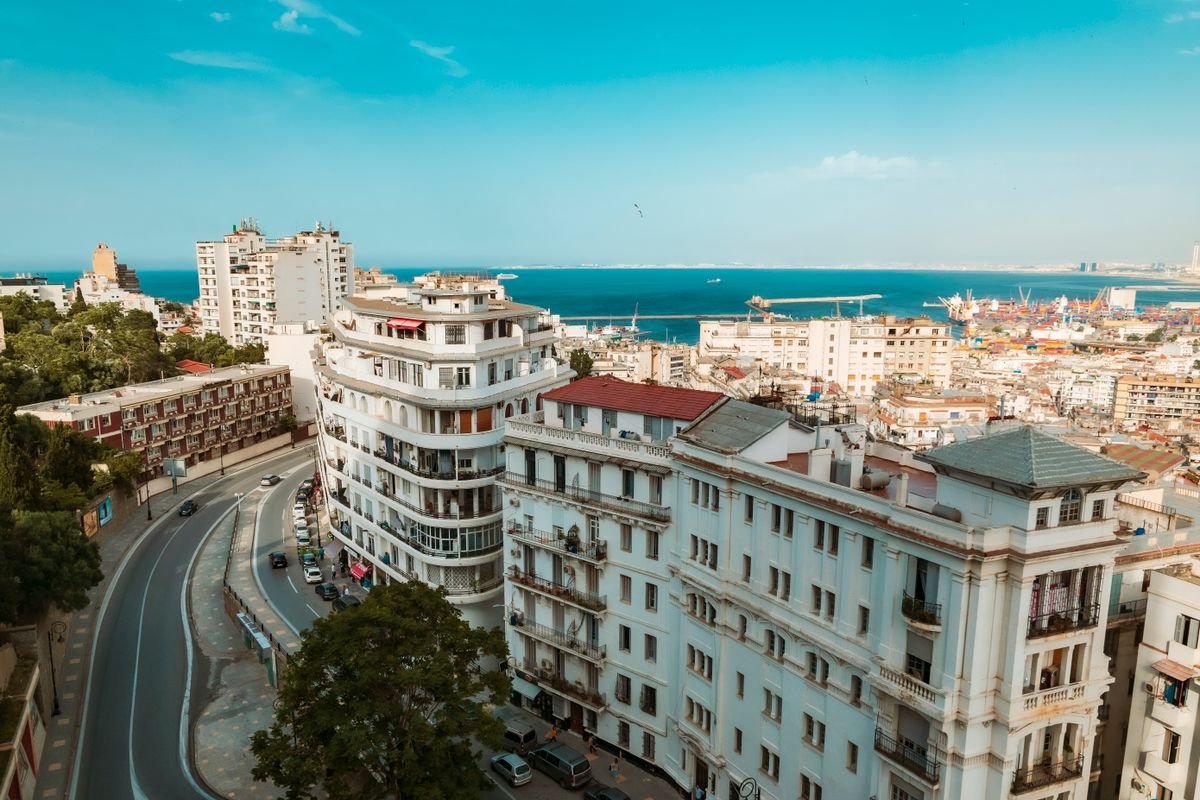
Algeria is about as close to a pure cash-on-delivery market as ecommerce gets. Published estimates put COD at roughly 95% of online orders. Card payment exists, and almost nobody uses it to buy things online.
That changes what a Shopify store has to be in Algeria. But the thing that decides whether an Algerian store makes money is not the checkout at all. It is a delivery choice most merchants never put in front of the customer.
The couriers, and the 58 wilayas
Algeria has a mature private courier industry built specifically around COD. The names you will meet:
| Carrier | Known for |
|---|---|
| Yalidine | The most used by ecommerce sellers. All 58 wilayas, large stop-desk network, a stable API. |
| ZR Express | Fast in the major cities. |
| Maystro Delivery | Favoured by larger stores. |
| Procolis | Strong on remote coverage. |
| Algeria Post | The cheapest, with a post office in nearly every commune. |
All four private carriers claim coverage of all 58 wilayas. That number matters more than it looks, because it is also the shape of your shipping table.
Stop desk: the decision that decides your margin
Algerian couriers offer two delivery modes. Home delivery, where a driver brings the parcel to the door. And stop desk, where the parcel waits at a pickup point and the customer collects it.
Stop desk is better on both sides of the profit equation at once, which is rare enough to be worth stopping on.
It is cheaper. Published 2026 ranges put stop desk at roughly 300–450 DZD against 400–600 DZD for home delivery in Algiers, and 500–800 DZD for home delivery out in the wilayas. Call it 100–200 DZD saved on every parcel.
And it is delivered more often. A customer who travels to a pickup point has already decided they want the thing. The two most expensive reasons for refusal — they changed their mind, and nobody was home — both weaken when collection is an act the customer chooses rather than an interruption they have to be present for.
What that is worth, in money
Take a store selling at 3,500 DZD with a product cost of 1,200 DZD, 70,000 DZD of ad spend bringing in 100 orders, 70 of which get confirmed, and a 2% COD collection fee.
| Setup | Delivered | Profit per 100 orders |
|---|---|---|
| Home delivery at 600 DZD, 75% delivered | 52 | −6,840 DZD |
| Stop desk at 400 DZD, 75% delivered | 52 | +10,760 DZD |
| Stop desk at 400 DZD, 85% delivered | 60 | +31,800 DZD |
Read the first two rows. Same product, same ads, same customers, same delivery rate — and one is a loss while the other is a profit. The only thing that changed is where the parcel ends its journey.
The third row adds a delivery-rate improvement. Treat that one as an illustration, not a promise. The industry consensus is that stop desk is delivered more often; nobody publishes a reliable figure for how much more often, and it will differ by product and city. Measure your own.
What is not an assumption is the first comparison. That is arithmetic on published courier pricing, and it is available to any Algerian store today.
So offer both, and let the customer choose
Do not quietly switch everything to stop desk. Home delivery is the right answer for heavy or bulky items, for elderly customers, and for anyone far from a pickup point — and taking the option away costs you those orders entirely.
Put both on the form with their real prices, and let the buyer pick. Most will take the cheaper one. The ones who need the door will say so.
Your shipping table has 58 rows, maybe 116
Algerian couriers price per wilaya, and separately for each delivery mode. So a complete table is 58 home-delivery prices and 58 stop-desk prices.
Most stores do not build that on day one, and they do not need to. Two reasonable starting points:
- Flat rate by mode. One price for home delivery, one for stop desk, averaged across the wilayas you actually ship to. Simple, and slightly wrong in both directions.
- Two or three bands. Algiers and the nearby wilayas at one price, the rest at another, the far south at a third. This is what most sellers settle on.
Whichever you pick, check it against your courier invoice after a month. A flat rate set too low on long-distance orders quietly turns your best-selling wilaya into your least profitable one.
The cash gap is wider here
Couriers in Algeria remit collected cash on a cycle of roughly 3 to 14 days, with Yalidine and Maystro typically running weekly transfers.
So your advertising leaves your account today and the cash from those sales lands up to two weeks later. While you are growing, the gap grows with you: every strong week increases the amount of your own money sitting in a courier’s account. Stores rarely run out of cash because something went wrong. They run out in the middle of a good month.
Keep a float covering at least one full remittance cycle of ad spend before you scale. The same trap exists in Morocco and is covered in the Morocco guide, but the longer Algerian cycle makes it sharper here.
What an Algerian buyer expects
- Their own language. Algerians speak Darja; French is widespread in commerce; Modern Standard Arabic reads as formal and distant. A form in Darja or French signals a local shop.
- A phone field that matters more than the address. The courier finds people by calling them. A wrong number is a lost order.
- Wilaya first. Address entry in Algeria usually starts with the wilaya, then the commune. Asking for a postcode first reads as a foreign form.
- Prices in dinar, with delivery shown. The customer needs to know the exact cash to have ready, and the delivery fee is a large share of a small order.
Setting it up on Shopify
Shopify’s built-in cash on delivery is a manual payment method at the end of a multi-step checkout. For a market where nearly every order is COD, that is the wrong shape: the buyer should be ordering from the product page in one step, and you need their phone number far more than you need their email.
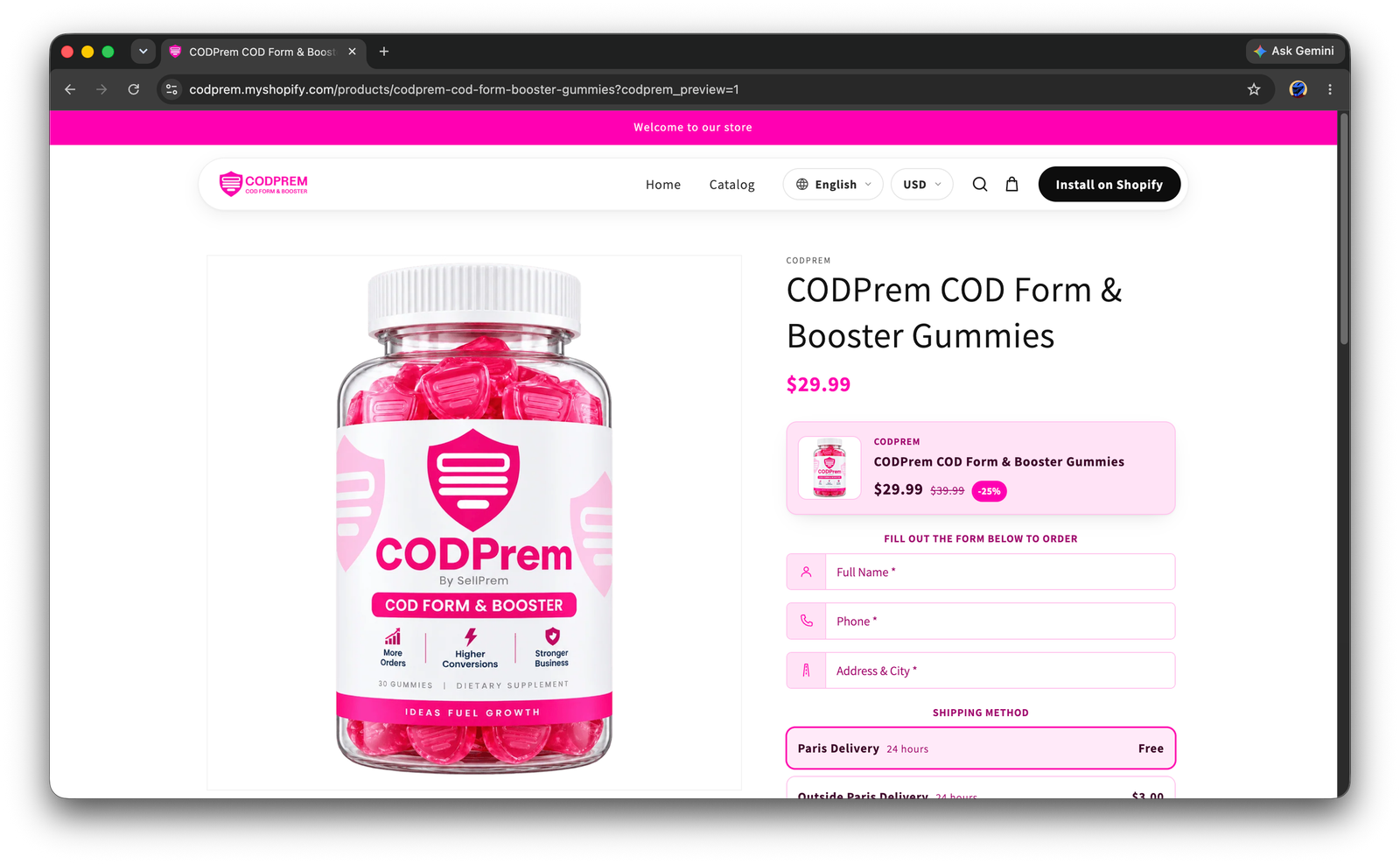
CODPrem replaces the Buy it now button with a one-page order form. For Algeria specifically: the form can serve Darja, Arabic or French, you define your own delivery options with their own prices — so Stop desk and Home delivery appear as two choices the buyer picks between — rates are set in dinar, and a confirmation-call question lets the customer choose when they can answer.
One honest limitation: no COD form app picks the stop desk for your customer. You offer the mode and its price; which desk the parcel goes to is handled in your courier’s own system. If that matters to you, ask your courier what their integration supports before you build around it.

The numbers to watch
Track the delivery rate separately for each mode. That one split tells you whether stop desk is working on your products, and it is the only way to replace the illustration above with your own figure. The method for turning those rates into profit is in what a COD order really earns you, and the levers that move them are in why COD customers refuse delivery.
Common questions
Can I sell on Shopify in Algeria with cash on delivery?
Yes. Shopify supports COD as a manual payment method, and Algerian couriers handle the collection. What Shopify does not provide is the one-page phone-first form or any record of what happened at the door, which is why most Algerian stores add an app for that half.
Which Algerian courier should I start with?
Yalidine is the usual first choice for ecommerce, on coverage and the size of the stop-desk network. Run a second carrier alongside it for a month and compare them on delivered orders rather than price per parcel.
Should I offer only stop desk to cut costs?
No. You would lose every customer with a bulky order or no desk nearby. Offer both and price them honestly; the saving comes from how many customers choose stop desk, not from removing the choice.
How should I handle 58 wilayas without 58 prices?
Start with two or three price bands and check them against a month of courier invoices. Refine the bands that are losing money; leave the rest alone.
Where to start
If you change one thing this week, put stop desk on the form as a real choice with its real price. It costs nothing to offer, it is the cheaper option for most customers, and on the arithmetic above it is the difference between a campaign that loses money and one that does not.