
Saudi Arabia is the clearest example anywhere of a cash-on-delivery market with a visible expiry date. 72% of Saudi online shoppers still use COD. Digital payment adoption moved from 62% to 70% in a single year.
Both numbers are true, and the second one is the one to plan around. At roughly eight percentage points a year, a store built only for cash on delivery is optimising for a window that is closing while you read this.
What is actually replacing it — and it is not cards
The intuitive assumption is that COD gives way to card payment. In the Gulf it mostly has not. What has taken the ground is buy now, pay later — Tabby and Tamara above all — along with the mada network, Apple Pay and STC Pay.
The reason is worth sitting with, because it explains the whole shift. Cash on delivery and BNPL answer the same anxiety. Both let a customer avoid handing over the full amount for something they have not yet seen. COD does it by delaying payment until the box is at the door; BNPL does it by splitting the payment so the exposure at any one moment is small.
A card asks for everything, up front, from a shop the buyer may not know. That is the one thing a cautious buyer did not want, which is why plain cards were never the answer here.
So if you are trying to move Saudi customers off COD, offering a card field will not do it. Offering Tabby or Tamara might.
The precedent nobody talks about
During the pandemic the Saudi regulator restricted cash on delivery outright, and the courier industry adapted within weeks by carrying portable card terminals to the door.
That is worth remembering for two reasons. It shows the delivery network can take payment at the door without physical cash, which is a genuinely useful middle option. And it is a reminder that in this market COD is subject to regulation in a way merchants elsewhere do not plan for.
Who still pays cash, and who does not
The split is sharp and it is mostly generational and geographic. Urban shoppers under 35 have largely moved; digital is their default. COD holds up with older buyers, outside the main cities, and on first purchases from an unfamiliar store.
Which gives a simple planning rule. If your product skews young and urban, build for BNPL and treat COD as a fallback. If it skews older or regional, keep COD properly supported for a few more years. Blending the two into one average will have you preparing for a market that is neither.
What the shift is worth in money
A COD order in the Gulf carries the usual costs — confirmation, freight out, freight back on a refusal, the collection fee, and the ad spend on orders that never pay. A BNPL order carries a provider fee and almost none of the rest, because it is settled before dispatch.
Run your own figures through the model in what a cash-on-delivery order really earns you, substituting the BNPL fee for the COD costs. For most Saudi merchants the provider fee is comfortably cheaper than one refused delivery in every five.
What a Saudi buyer expects
- Arabic, properly done. Saudi buyers are well served by local stores and notice a translation that is not.
- Tabby or Tamara on the product page, with the instalment figure visible — the same role the taksit figure plays in Turkey.
- mada, which is the domestic card network and more widely held than international cards.
- Fast delivery. Expectations in Riyadh and Jeddah are set by well-funded local players and are high.
- The total in riyals before ordering, including delivery, if COD is the chosen method.
Setting it up on Shopify
Payments first: get mada and at least one BNPL provider live, and surface the instalment figure on the product page rather than at checkout. That is a gateway decision and no order-form app replaces it.
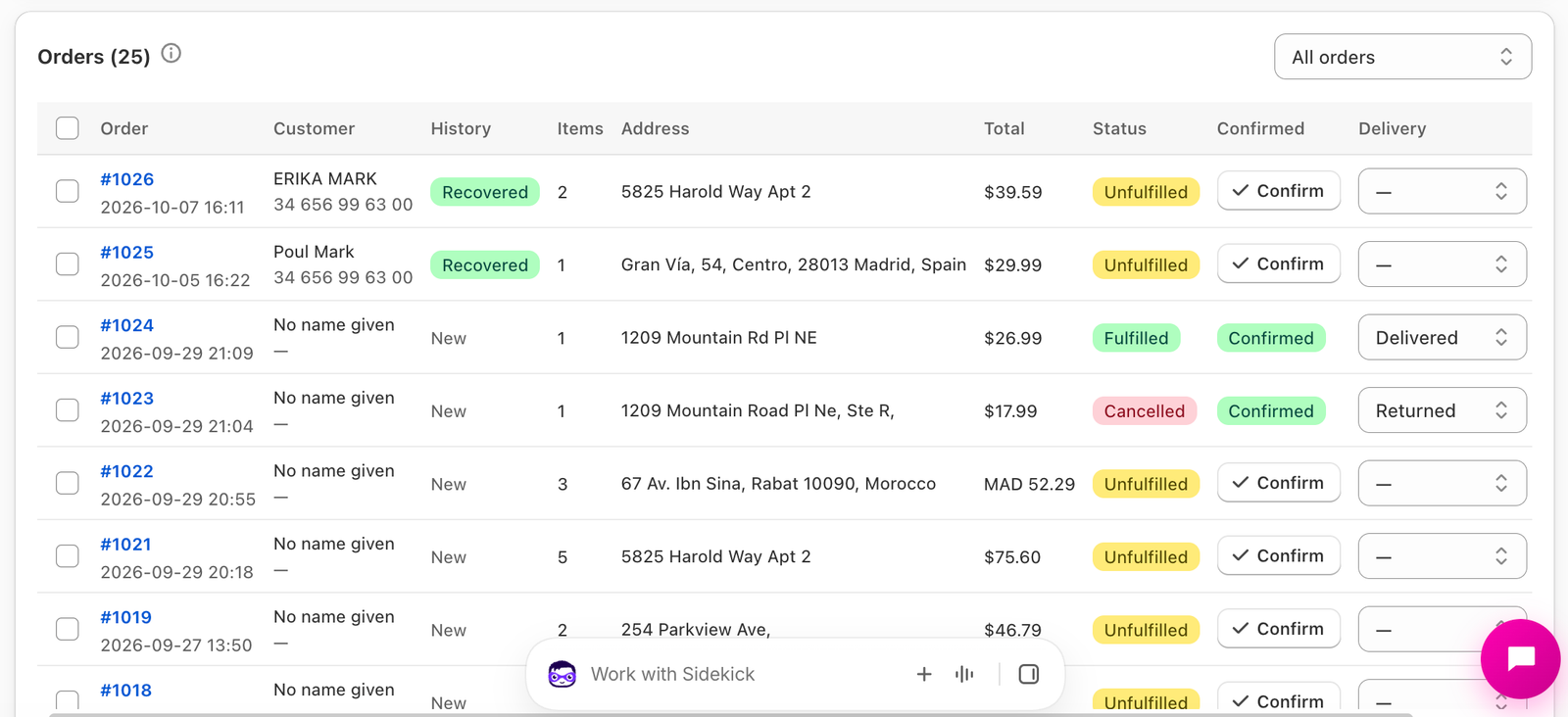
For the COD share that remains — still the majority today — CODPrem puts a one-page order form on the product page in Arabic, with delivery rates in riyals, the full total shown before the buyer commits, a confirmation-call question, and delivery outcomes recorded so you can watch the COD share shrink against your prepaid share rather than guessing at it.

The number to watch here is a trend, not a level
Most markets in this series have a COD share you can treat as roughly fixed while you optimise around it. Saudi does not. Measure your own COD share every month and plot it.
If it is falling at anything like the national rate, you can see roughly when it stops being the thing worth optimising — and that date should be driving what you build now.
Common questions
Is cash on delivery finished in Saudi Arabia?
Not yet — around 72% of shoppers still use it. But adoption of digital payment is moving about eight points a year, and that is fast enough that a three-year plan built on COD is a plan for a market that will not exist.
Why has BNPL taken over rather than cards?
Because it solves the same problem COD solves. A buyer nervous about paying in full for an unseen product is helped by splitting the payment, and not helped by a card form. Cards ask for exactly the commitment they were avoiding.
Should I drop COD now?
No. It is still the majority of orders, and dropping it would cost you older and regional customers immediately. Add the alternatives, make them attractive, and let the mix move on its own.
Does the regulator still restrict COD?
The pandemic restrictions were a specific measure, not a permanent rule. The lasting lesson is that COD here sits in a regulated environment and that couriers proved they can take card payment at the door when required.
Where to start
Add a BNPL provider and plot your monthly COD share. The first keeps you competitive with how Saudi shoppers already buy; the second tells you how much longer the rest of this article applies to you.