
A store that works in one cash on delivery market rarely works unchanged in the next one. The product can be identical, the ads can be identical, and the delivery rate can differ by twenty points, because the thing that changed was not the offer. It was the courier network, the address format, the language the form is written in, and what the word “delivery” means at the door.
This article sets out what actually has to change per country, what can safely stay the same, and the order to add markets in.
What changes and what does not
| Stays the same | Changes per country |
|---|---|
| Your product and positioning | The currency the price is shown in |
| Your margin targets | The language of the form and the confirmation |
| The structure of your form | Which address fields exist and what they are called |
| Your confirmation process | The courier, and therefore the delivery rate |
| How you measure | The remittance cycle and the return fee |
| Your fraud rules | The share of buyers who will pay before delivery |
The left column is why a multi-country cash on delivery store is worth building at all. The right column is why it fails when people assume the left column is the whole list.
The five things that genuinely break
1. The address format
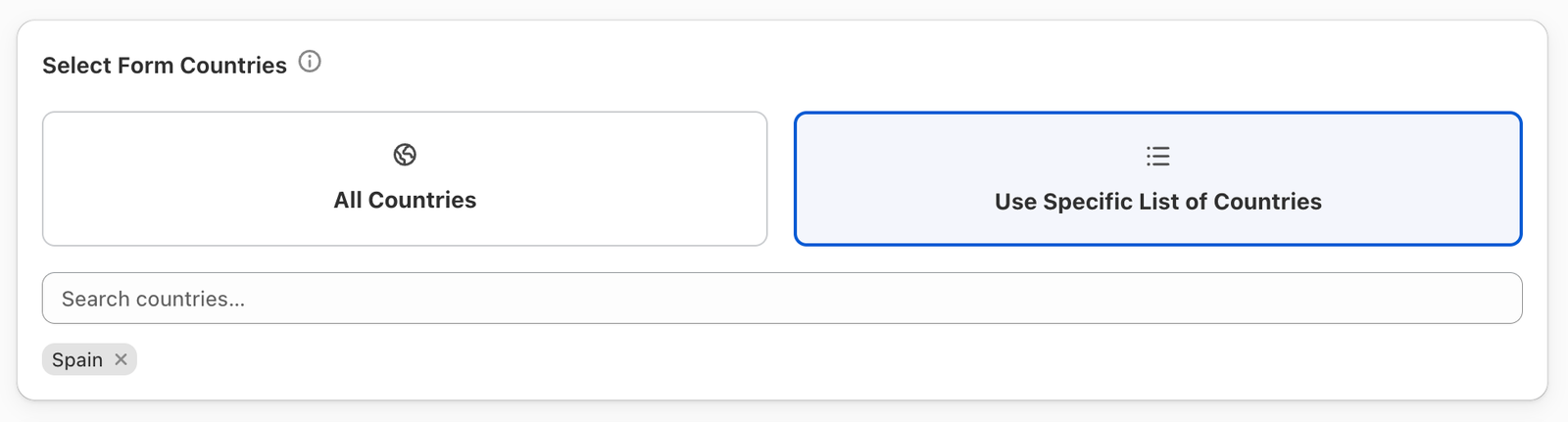
Address structure is not cosmetic. A form that asks for a ZIP code in a country where people do not use one produces either a blank field or an invented number, and a courier who cannot route on either. A form that omits a state field in a country where the state decides the delivery zone produces parcels that cost more than you charged.
Two rules cover most of it: ask for the country first, because the region list and the address lookup both depend on it, and take the region from a real list rather than free text. A region typed by hand is a region misspelled.
2. The phone number
A phone number is the single most important field on a cash on delivery form, and it is the one that differs most across borders. Leading zeros, trunk prefixes, mobile-prefix ranges and length all change. A validation rule written for one country silently rejects real customers in the next one, or accepts numbers that reach nobody.
Validate against the country the buyer selected, not against the country your store is based in. This sounds obvious and is the most common cause of a market that produces orders nobody can confirm.
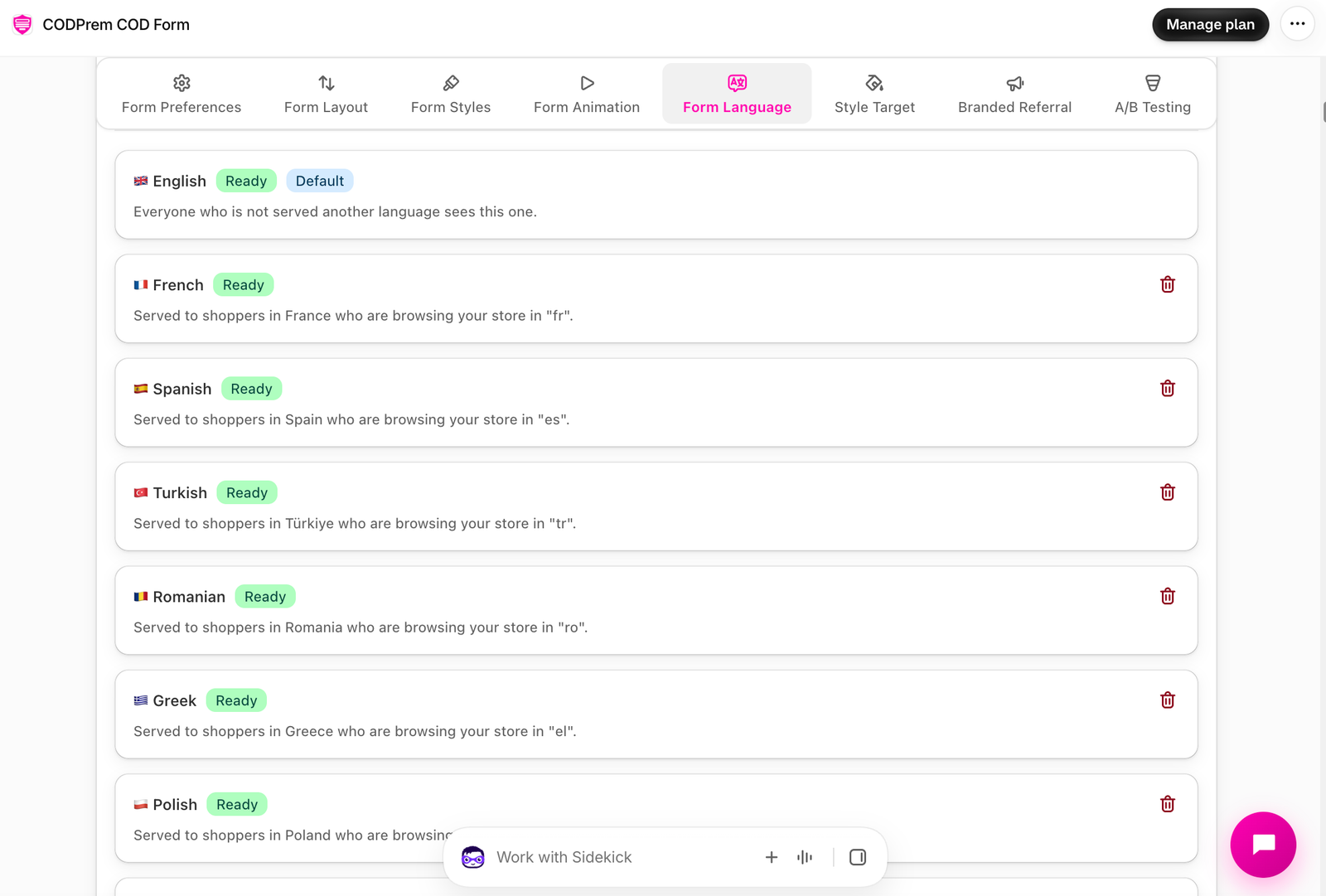
3. The language
A buyer who reads the product page in their own language and then meets an English order form has been handed a reason to doubt. In markets where cash on delivery is normal precisely because trust in online payment is low, a form in the wrong language is not a small friction.
Both halves have to move: the labels and buttons, which are the app’s words, and your own wording on badges, offers and the confirmation, which are yours. A half-translated form is more suspicious than an English one, because it reads as unfinished.
4. The currency
Prices shown in a currency the buyer does not hold are prices they cannot evaluate. Shopify Markets handles the conversion; what matters is that the figure on the form, the figure on the button and the figure the driver asks for are the same number. A mismatch of any size in the amount collected at the door is the fastest way to a refused parcel.
5. The courier
This is the largest one and the hardest to shortcut. Delivery rate is a property of the carrier and the region far more than of your store, and a carrier excellent in one country may not operate in the next at all. Each market is a fresh selection, a fresh trial and a fresh remittance cycle. The method is the same everywhere: see choosing a COD courier.
One store or several
The question comes up early and the answer is usually one store, with exceptions.
| One store, several markets | A store per country | |
|---|---|---|
| Setup effort | Lower | Multiplied by the number of markets |
| Reporting | One place | Reconciled by hand |
| Domain and trust | One brand | Local domain can help in some markets |
| Payment providers | Limited to what one store supports | Local provider per country |
| When it wins | Most of the time | When local payment or legal presence forces it |
The usual reason to split is not marketing. It is that a local prepayment method you need is only available to a locally registered business, and the store has to be registered there to use it. Short of that, one store with per-country settings is less work and produces one set of numbers you can compare.
Add markets in an order that teaches you something
Adding five countries at once produces five sets of problems arriving simultaneously, which makes none of them diagnosable. A better sequence:
- Start adjacent. Your second market should share a language or a courier network with your first, so only one variable moves.
- Run it for a full month before adding a third. A month contains a payday and a holiday, and both move cash on delivery behaviour.
- Measure the new market separately from day one. Blending it into your store-wide figure hides exactly what you are trying to learn.
- Only scale ads once the delivery rate has settled. Scaling a market whose rate you do not know yet is buying orders at an unknown cost.
The second point matters more than it sounds. A new market’s first fortnight is dominated by parcels still in transit, so the rate you read is meaningless. See how to measure COD delivery rate for why the window has to close before you read it.
Where the markets differ most
A few concrete contrasts, drawn from the country guides, to show how wide the range is:
| Market | What is different about it |
|---|---|
| Morocco | Cash on delivery is the default rather than an option; dense courier competition in the main cities |
| Algeria | Stop-desk collection changes the economics completely against home delivery |
| Egypt | An established cash-payment network means prepayment is available to people without cards |
| Pakistan | Return handling differs sharply between carriers and is the main cost variable |
| India | Prepaid and cash orders behave so differently that treating them as one funnel is a mistake |
| Romania | Lockers and card-on-delivery are mainstream, which pulls the cash share down |
| Turkey | Cash on delivery is a minority method; the default assumption from other markets is wrong here |
| Indonesia | Marketplace behaviour sets customer expectations for your own store |
| Saudi Arabia | High card use alongside a persistent cash segment |
| Iraq | Courier coverage varies enormously by region |
| Tunisia | Small market, few carriers, so carrier choice is most of your delivery rate |
| Poland | Locker networks dominate; cash on delivery means something different at a machine than at a door |
Reading two or three of those before entering a market is the cheapest research available, and it will usually change what you were about to do.
What to keep identical on purpose
Resist the urge to redesign per country. Three things should be the same everywhere so that differences in the results mean something:
- The fields you ask for. Beyond what the address format genuinely requires, asking more in one market and less in another makes the conversion comparison worthless.
- The confirmation process. If one market is confirmed and another is not, the delivery rate gap tells you nothing about the market.
- The definition of every number you report. Delivered divided by orders placed, everywhere, with cancelled orders in the denominator.
Once those are fixed, a difference between two markets is a real difference, and you can act on it.
A per-market checklist
| Before launch | After four weeks |
|---|---|
| Country in the allowed list | Delivery rate, measured end to end |
| Address fields match local format | Confirmation rate, and the reasons for failures |
| Phone validation set to that country | Return rate and what it cost |
| Form language enabled | Remittance cycle, measured not quoted |
| Currency displayed correctly | Prepaid share, if you offer an incentive |
| Shipping rates per region | Whether the courier is the right one |
If one of those four-week numbers is bad, the country guides above usually name the local cause. If all four are bad, the problem is more likely the offer than the market, and the place to start is what a cash on delivery order really earns.
The short version
A multi-country cash on delivery store is one offer, one process and one way of measuring, with five things changed per market: address format, phone validation, language, currency and courier.
Add markets one at a time, keep everything else identical so the comparison means something, give each one a full month before judging it, and read what is specific about the country before you enter it rather than after.